The 5th BRICS+ Digital Competition Forum has opened in Rio de Janeiro. The event is jointly organised by the International BRICS Competition Law and Policy Centre, Brazil’s competition authority (CADE), and the FGV Law School. This year’s forum focuses on the key challenges facing the digital economy and on how to build a fair, competitive and sustainable digital environment amid the rapid development of artificial intelligence and digital platforms.
Opening the forum, Alexey Ivanov, Director of the BRICS Competition Centre, highlighted the Centre’s role in bringing together competition policy experts from BRICS countries and fostering cooperation between public authorities and the academic community. The Digital Competition Forum has established itself as an international platform for exchanging expertise and building professional ties. Its reach continues to expand, with a growing number of countries taking part and closer cooperation with UN Trade and Development (UNCTAD).
Ivanov noted that AI is increasingly shaping a wide range of economic sectors, including food production, finance and healthcare. Competition authorities have a distinctive role to play in this process: their mandate extends beyond individual industries to protecting broader economic and public interests. He stressed the importance of their active involvement in assessing the implications of technological change and presented the analytical report "BRICS Competition Policy in the AI Era," which sets out a series of recommendations. The report draws on the outcomes of a seminar held in Moscow with representatives from BRICS countries.
Camila Pires Alves, Commissioner, CADE, also addressed the opening session. She expressed hope for closer cooperation, further joint initiatives and new opportunities for professional exchange among BRICS members.
“I think the key message CADE wants to convey is the importance of this event and, just as importantly, our shared commitment to keeping the dialogue going, maintaining the connections we have built and strengthening cooperation throughout the year, right up to our next meeting. We continue to grow and develop together, not only as a professional community but also as friends.”
Giuseppe Conte, Professor of Private Law, University of Florence, former Prime, Minister of the Italian Republic (2018-2021), delivered the keynote address at the plenary session, Competition Policy, Development and Economic Power in the Age of AI. His opening remarks set the conceptual framework for the discussion.

© HSE University
He argued that the rise of digital technologies and artificial intelligence has given rise to a new form of capitalism, characterised by the growing concentration of economic and political power in the hands of major technology companies. He described this model as "surveillance capitalism", in which users’ data, everyday activities and personal experiences become resources for generating profit.
At the same time, the relationship between digital platforms and their users remains unequal, raising concerns about personal data protection, privacy, human dignity and individual identity. Among the key challenges, Professor Conte highlighted inadequate legal safeguards for users, a lack of transparency and effective oversight of algorithms, uncertainty over accountability for AI-related errors, the risk of discrimination, and the potential replacement of democratic institutions with technocratic forms of governance.
He called for an international regulatory framework based on the principles of "digital constitutionalism of universal scope," designed to protect fundamental human rights and uphold constitutional democracy. Professor Conte argued that the existing US, Chinese and European approaches to digital regulation do not yet provide sufficient safeguards for the public interest. Regulation, he stressed, should go beyond the legal oversight of technology companies to address the fair distribution of the economic benefits they generate.
“I propose the creation of an international regulatory framework that could lay the foundations for universal digital constitutionalism. However, digital constitutionalism should go beyond establishing legal principles and rules. It must also address the fair distribution of wealth generated by the digital economy. Digital giants should pay what could be called social dividends in the countries where they operate. If they derive economic value from people’s lives, it is only fair that part of that value should be returned to society.”
Relations between digital platforms and society, he argued, should not be reduced to a bilateral arrangement between service providers and users. Instead, a broader framework of social relations is needed, one that ensures a fairer distribution of the benefits generated by the digital economy.
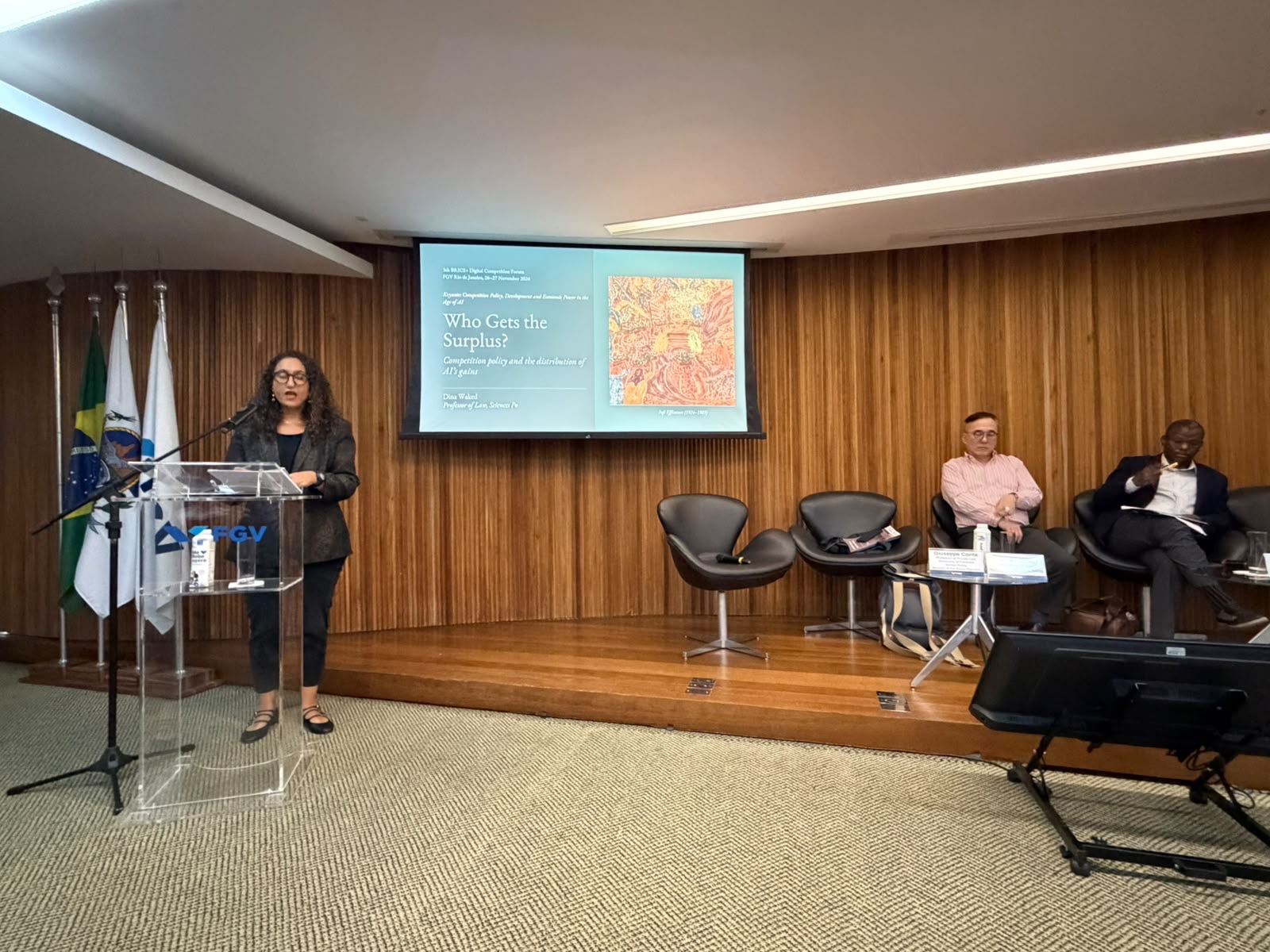
Dina Waked, Professor of Law at Sciences Po in Paris, also stressed that competition law should look beyond prices, market access and companies’ positions to consider how the economic value created by artificial intelligence is distributed.
Many of the resources underpinning AI development — data, human labour, natural resources, languages and knowledge — come from countries in the Global South, while most of the added value and profits are concentrated in the Global North. Waked illustrated this imbalance with several examples: the low wages paid to data annotation workers in Kenya, the large volumes of freshwater consumed by Google’s data centres in Uruguay, and Meta’s* attempt to use Brazilian users’ data to train its AI systems.
© HSE University
Waked argued that this situation echoes the historical exploitation of Egyptian cotton: countries supply the raw materials, while most of the economic benefits from processing them accrue elsewhere.
“In a sense, the resources used to develop AI are treated as though they belong to no one — or, conversely, to everyone — and can therefore be freely used. Yet the results of processing these resources become the private property of individual companies, which then profit from them.”
She outlined five areas where competition policy could help address this imbalance: incorporating broader public interests into competition policy; ensuring fair and non-discriminatory access to digital technologies; increasing transparency around the origins and use of data; strengthening international cooperation, particularly within BRICS; and introducing mechanisms to redistribute part of technology companies’ profits to the local communities and countries that provide the resources underpinning AI development.
Waked placed particular emphasis on cooperation among BRICS countries. Competition alone, she argued, does not guarantee a fair distribution of the benefits of digital development. Competition authorities therefore need to play a more active role in ensuring that countries and communities contributing resources to AI development receive a fair share of the economic value generated.
Thomas Cheng, Professor of Law, University of Hong Kong, argued that AI regulation should take account of the specific circumstances of developing countries, particularly their technological capabilities and economic structures.
He noted that AI could significantly reshape competition between the formal and informal sectors of the economy. By adopting new technologies, small businesses could narrow the gap with larger companies in terms of knowledge, skills and productivity. At the same time, developing countries should not be treated as a single group: some are likely to remain primarily consumers of AI, while others have the capacity to develop their own technologies, with a third group holding considerable potential to do so.
“Developing AI foundation models requires enormous investment, including substantial investment in the supporting infrastructure and other related areas. The sums involved are astronomical, and few countries are in a position to make such investments. This makes the question of how industrial policy should be accommodated within the framework of competition law in the context of AI development particularly challenging. As countries consider pursuing industrial policy, they must carefully assess whether they are actually capable of making it work.”
Turning to the challenges facing competition authorities, Cheng highlighted several key risks: algorithmic collusion, including autonomous price coordination by algorithms; personalised pricing, which may facilitate the abuse of a dominant position; and high levels of concentration at different layers of the AI ecosystem.

© HSE University
He also cautioned that competition law has limited power to reshape market structures. Its primary role is to remove barriers to entry for new players, but this does not necessarily mean that viable competitors will emerge.
“Competition law can, at best, remove barriers to entry and facilitate market entry. However, this does not necessarily lead to a change in market structure. Its ability to bring about such changes is limited: it can remove barriers to entry and allow market forces to reshape the market, but it cannot itself determine the direction of that change."
“I would argue that, from the perspective of developing countries, concentration along the AI stack may deserve less attention, because most developing countries are likely to be AI consumers rather than AI producers. In my view, concentration along the AI stack is likely to be of greater concern to countries with foundation model developers than to those that primarily consume AI technologies. For example, NVIDIA’s dominance as a GPU supplier would probably be less of a concern for developing countries than for countries with a significant number of foundation model developers.”
© HSE University
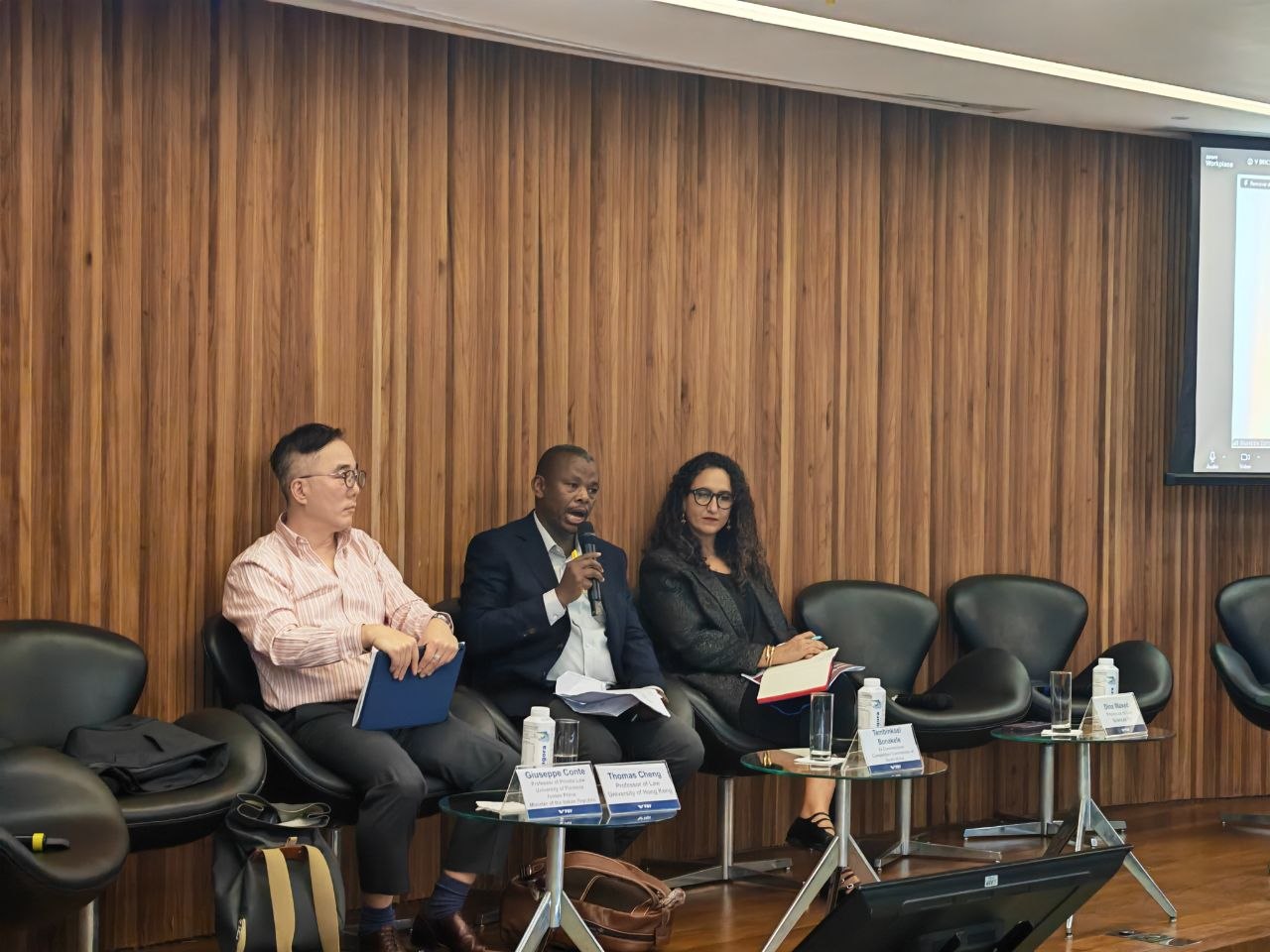
Tembinkosi Bonakele, Ex-Commissioner of the South African Competition Commission, argued that discussions about AI should extend beyond competition issues to consider its broader impact on society, including how the benefits and risks of digital transformation are distributed. He stressed that making effective use of AI requires adequate infrastructure, warning that the digital divide is becoming even more pronounced in communities where access to the internet remains limited.
“Access to the internet, which those of us in this room take for granted, is made possible by technology. Without access to basic communication and digital tools, people are already at a disadvantage before they even have a chance to compete.This is something we must not overlook when discussing innovation and industrial development.”
Bonakele noted that around two billion people worldwide still lack internet access, stressing that one of the key challenges is to ensure that they, too, can become part of the digital world.
*banned and designated as extremist in Russia